
472 lines
15 KiB
Markdown
472 lines
15 KiB
Markdown
<div align="center">
|
||
<a href="https://github.com/topoteretes/cognee">
|
||
<img src="https://raw.githubusercontent.com/topoteretes/cognee/refs/heads/dev/assets/cognee-logo-transparent.png" alt="Cognee Logo" height="60">
|
||
</a>
|
||
|
||
<br />
|
||
|
||
cognee‑mcp - Run cognee’s memory engine as a Model Context Protocol server
|
||
|
||
<p align="center">
|
||
<a href="https://www.youtube.com/watch?v=1bezuvLwJmw&t=2s">Demo</a>
|
||
.
|
||
<a href="https://cognee.ai">Learn more</a>
|
||
·
|
||
<a href="https://discord.gg/NQPKmU5CCg">Join Discord</a>
|
||
·
|
||
<a href="https://www.reddit.com/r/AIMemory/">Join r/AIMemory</a>
|
||
</p>
|
||
|
||
|
||
[](https://GitHub.com/topoteretes/cognee/network/)
|
||
[](https://GitHub.com/topoteretes/cognee/stargazers/)
|
||
[](https://GitHub.com/topoteretes/cognee/commit/)
|
||
[](https://github.com/topoteretes/cognee/tags/)
|
||
[](https://pepy.tech/project/cognee)
|
||
[](https://github.com/topoteretes/cognee/blob/main/LICENSE)
|
||
[](https://github.com/topoteretes/cognee/graphs/contributors)
|
||
|
||
<a href="https://www.producthunt.com/posts/cognee?embed=true&utm_source=badge-top-post-badge&utm_medium=badge&utm_souce=badge-cognee" target="_blank"><img src="https://api.producthunt.com/widgets/embed-image/v1/top-post-badge.svg?post_id=946346&theme=light&period=daily&t=1744472480704" alt="cognee - Memory for AI Agents  in 5 lines of code | Product Hunt" style="width: 250px; height: 54px;" width="250" height="54" /></a>
|
||
|
||
<a href="https://trendshift.io/repositories/13955" target="_blank"><img src="https://trendshift.io/api/badge/repositories/13955" alt="topoteretes%2Fcognee | Trendshift" style="width: 250px; height: 55px;" width="250" height="55"/></a>
|
||
|
||
|
||
Build memory for Agents and query from any client that speaks MCP – in your terminal or IDE.
|
||
|
||
</div>
|
||
|
||
## ✨ Features
|
||
|
||
- Multiple transports – choose Streamable HTTP --transport http (recommended for web deployments), SSE --transport sse (real‑time streaming), or stdio (classic pipe, default)
|
||
- **API Mode** – connect to an already running Cognee FastAPI server instead of using cognee directly (see [API Mode](#-api-mode) below)
|
||
- Integrated logging – all actions written to a rotating file (see get_log_file_location()) and mirrored to console in dev
|
||
- Local file ingestion – feed .md, source files, Cursor rule‑sets, etc. straight from disk
|
||
- Background pipelines – long‑running cognify & codify jobs spawn off‑thread; check progress with status tools
|
||
- Developer rules bootstrap – one call indexes .cursorrules, .cursor/rules, AGENT.md, and friends into the developer_rules nodeset
|
||
- Prune & reset – wipe memory clean with a single prune call when you want to start fresh
|
||
|
||
Please refer to our documentation [here](https://docs.cognee.ai/how-to-guides/deployment/mcp) for further information.
|
||
|
||
## 🚀 Quick Start
|
||
|
||
1. Clone cognee repo
|
||
```
|
||
git clone https://github.com/topoteretes/cognee.git
|
||
```
|
||
2. Navigate to cognee-mcp subdirectory
|
||
```
|
||
cd cognee/cognee-mcp
|
||
```
|
||
3. Install uv if you don't have one
|
||
```
|
||
pip install uv
|
||
```
|
||
4. Install all the dependencies you need for cognee mcp server with uv
|
||
```
|
||
uv sync --dev --all-extras --reinstall
|
||
```
|
||
5. Activate the virtual environment in cognee mcp directory
|
||
```
|
||
source .venv/bin/activate
|
||
```
|
||
6. Set up your OpenAI API key in .env for a quick setup with the default cognee configurations
|
||
```
|
||
LLM_API_KEY="YOUR_OPENAI_API_KEY"
|
||
```
|
||
7. Run cognee mcp server with stdio (default)
|
||
```
|
||
python src/server.py
|
||
```
|
||
or stream responses over SSE
|
||
```
|
||
python src/server.py --transport sse
|
||
```
|
||
or run with Streamable HTTP transport (recommended for web deployments)
|
||
```
|
||
python src/server.py --transport http --host 127.0.0.1 --port 8000 --path /mcp
|
||
```
|
||
|
||
You can do more advanced configurations by creating .env file using our <a href="https://github.com/topoteretes/cognee/blob/main/.env.template">template.</a>
|
||
To use different LLM providers / database configurations, and for more info check out our <a href="https://docs.cognee.ai">documentation</a>.
|
||
|
||
|
||
## 🐳 Docker Usage
|
||
|
||
If you'd rather run cognee-mcp in a container, you have two options:
|
||
|
||
1. **Build locally**
|
||
1. Make sure you are in /cognee root directory and have a fresh `.env` containing only your `LLM_API_KEY` (and your chosen settings).
|
||
2. Remove any old image and rebuild:
|
||
```bash
|
||
docker rmi cognee/cognee-mcp:main || true
|
||
docker build --no-cache -f cognee-mcp/Dockerfile -t cognee/cognee-mcp:main .
|
||
```
|
||
3. Run it:
|
||
```bash
|
||
# For HTTP transport (recommended for web deployments)
|
||
docker run -e TRANSPORT_MODE=http --env-file ./.env -p 8000:8000 --rm -it cognee/cognee-mcp:main
|
||
# For SSE transport
|
||
docker run -e TRANSPORT_MODE=sse --env-file ./.env -p 8000:8000 --rm -it cognee/cognee-mcp:main
|
||
# For stdio transport (default)
|
||
docker run -e TRANSPORT_MODE=stdio --env-file ./.env --rm -it cognee/cognee-mcp:main
|
||
```
|
||
2. **Pull from Docker Hub** (no build required):
|
||
```bash
|
||
# With HTTP transport (recommended for web deployments)
|
||
docker run -e TRANSPORT_MODE=http --env-file ./.env -p 8000:8000 --rm -it cognee/cognee-mcp:main
|
||
# With SSE transport
|
||
docker run -e TRANSPORT_MODE=sse --env-file ./.env -p 8000:8000 --rm -it cognee/cognee-mcp:main
|
||
# With stdio transport (default)
|
||
docker run -e TRANSPORT_MODE=stdio --env-file ./.env --rm -it cognee/cognee-mcp:main
|
||
```
|
||
|
||
### **Important: Docker vs Direct Usage**
|
||
**Docker uses environment variables**, not command line arguments:
|
||
- ✅ Docker: `-e TRANSPORT_MODE=http`
|
||
- ❌ Docker: `--transport http` (won't work)
|
||
|
||
**Direct Python usage** uses command line arguments:
|
||
- ✅ Direct: `python src/server.py --transport http`
|
||
- ❌ Direct: `-e TRANSPORT_MODE=http` (won't work)
|
||
|
||
### **Docker API Mode**
|
||
|
||
To connect the MCP Docker container to a Cognee API server running on your host machine:
|
||
|
||
#### **Simple Usage (Automatic localhost handling):**
|
||
```bash
|
||
# Start your Cognee API server on the host
|
||
python -m cognee.api.client
|
||
|
||
# Run MCP container in API mode - localhost is automatically converted!
|
||
docker run \
|
||
-e TRANSPORT_MODE=sse \
|
||
-e API_URL=http://localhost:8000 \
|
||
-e API_TOKEN=your_auth_token \
|
||
-p 8001:8000 \
|
||
--rm -it cognee/cognee-mcp:main
|
||
```
|
||
**Note:** The container will automatically convert `localhost` to `host.docker.internal` on Mac/Windows/Docker Desktop. You'll see a message in the logs showing the conversion.
|
||
|
||
#### **Explicit host.docker.internal (Mac/Windows):**
|
||
```bash
|
||
# Or explicitly use host.docker.internal
|
||
docker run \
|
||
-e TRANSPORT_MODE=sse \
|
||
-e API_URL=http://host.docker.internal:8000 \
|
||
-e API_TOKEN=your_auth_token \
|
||
-p 8001:8000 \
|
||
--rm -it cognee/cognee-mcp:main
|
||
```
|
||
|
||
#### **On Linux (use host network or container IP):**
|
||
```bash
|
||
# Option 1: Use host network (simplest)
|
||
docker run \
|
||
--network host \
|
||
-e TRANSPORT_MODE=sse \
|
||
-e API_URL=http://localhost:8000 \
|
||
-e API_TOKEN=your_auth_token \
|
||
--rm -it cognee/cognee-mcp:main
|
||
|
||
# Option 2: Use host IP address
|
||
# First, get your host IP: ip addr show docker0
|
||
docker run \
|
||
-e TRANSPORT_MODE=sse \
|
||
-e API_URL=http://172.17.0.1:8000 \
|
||
-e API_TOKEN=your_auth_token \
|
||
-p 8001:8000 \
|
||
--rm -it cognee/cognee-mcp:main
|
||
```
|
||
|
||
**Environment variables for API mode:**
|
||
- `API_URL`: URL of the running Cognee API server
|
||
- `API_TOKEN`: Authentication token (optional, required if API has authentication enabled)
|
||
|
||
**Note:** When running in API mode:
|
||
- Database migrations are automatically skipped (API server handles its own DB)
|
||
- Some features are limited (see [API Mode Limitations](#-api-mode))
|
||
|
||
|
||
## 🔗 MCP Client Configuration
|
||
|
||
After starting your Cognee MCP server with Docker, you need to configure your MCP client to connect to it.
|
||
|
||
### **SSE Transport Configuration** (Recommended)
|
||
|
||
**Start the server with SSE transport:**
|
||
```bash
|
||
docker run -e TRANSPORT_MODE=sse --env-file ./.env -p 8000:8000 --rm -it cognee/cognee-mcp:main
|
||
```
|
||
|
||
**Configure your MCP client:**
|
||
|
||
#### **Claude CLI (Easiest)**
|
||
```bash
|
||
claude mcp add cognee-sse -t sse http://localhost:8000/sse
|
||
```
|
||
|
||
**Verify the connection:**
|
||
```bash
|
||
claude mcp list
|
||
```
|
||
|
||
You should see your server connected:
|
||
```
|
||
Checking MCP server health...
|
||
|
||
cognee-sse: http://localhost:8000/sse (SSE) - ✓ Connected
|
||
```
|
||
|
||
#### **Manual Configuration**
|
||
|
||
**Claude (`~/.claude.json`)**
|
||
```json
|
||
{
|
||
"mcpServers": {
|
||
"cognee": {
|
||
"type": "sse",
|
||
"url": "http://localhost:8000/sse"
|
||
}
|
||
}
|
||
}
|
||
```
|
||
|
||
**Cursor (`~/.cursor/mcp.json`)**
|
||
```json
|
||
{
|
||
"mcpServers": {
|
||
"cognee-sse": {
|
||
"url": "http://localhost:8000/sse"
|
||
}
|
||
}
|
||
}
|
||
```
|
||
|
||
### **HTTP Transport Configuration** (Alternative)
|
||
|
||
**Start the server with HTTP transport:**
|
||
```bash
|
||
docker run -e TRANSPORT_MODE=http --env-file ./.env -p 8000:8000 --rm -it cognee/cognee-mcp:main
|
||
```
|
||
|
||
**Configure your MCP client:**
|
||
|
||
#### **Claude CLI (Easiest)**
|
||
```bash
|
||
claude mcp add cognee-http -t http http://localhost:8000/mcp
|
||
```
|
||
|
||
**Verify the connection:**
|
||
```bash
|
||
claude mcp list
|
||
```
|
||
|
||
You should see your server connected:
|
||
```
|
||
Checking MCP server health...
|
||
|
||
cognee-http: http://localhost:8000/mcp (HTTP) - ✓ Connected
|
||
```
|
||
|
||
#### **Manual Configuration**
|
||
|
||
**Claude (`~/.claude.json`)**
|
||
```json
|
||
{
|
||
"mcpServers": {
|
||
"cognee": {
|
||
"type": "http",
|
||
"url": "http://localhost:8000/mcp"
|
||
}
|
||
}
|
||
}
|
||
```
|
||
|
||
**Cursor (`~/.cursor/mcp.json`)**
|
||
```json
|
||
{
|
||
"mcpServers": {
|
||
"cognee-http": {
|
||
"url": "http://localhost:8000/mcp"
|
||
}
|
||
}
|
||
}
|
||
```
|
||
|
||
### **Dual Configuration Example**
|
||
You can configure both transports simultaneously for testing:
|
||
|
||
```json
|
||
{
|
||
"mcpServers": {
|
||
"cognee-sse": {
|
||
"type": "sse",
|
||
"url": "http://localhost:8000/sse"
|
||
},
|
||
"cognee-http": {
|
||
"type": "http",
|
||
"url": "http://localhost:8000/mcp"
|
||
}
|
||
}
|
||
}
|
||
```
|
||
|
||
**Note:** Only enable the server you're actually running to avoid connection errors.
|
||
|
||
## 🌐 API Mode
|
||
|
||
The MCP server can operate in two modes:
|
||
|
||
### **Direct Mode** (Default)
|
||
The MCP server directly imports and uses the cognee library. This is the default mode with full feature support.
|
||
|
||
### **API Mode**
|
||
The MCP server connects to an already running Cognee FastAPI server via HTTP requests. This is useful when:
|
||
- You have a centralized Cognee API server running
|
||
- You want to separate the MCP server from the knowledge graph backend
|
||
- You need multiple MCP servers to share the same knowledge graph
|
||
|
||
**Starting the MCP server in API mode:**
|
||
```bash
|
||
# Start your Cognee FastAPI server first (default port 8000)
|
||
cd /path/to/cognee
|
||
python -m cognee.api.client
|
||
|
||
# Then start the MCP server in API mode
|
||
cd cognee-mcp
|
||
python src/server.py --api-url http://localhost:8000 --api-token YOUR_AUTH_TOKEN
|
||
```
|
||
|
||
**API Mode with different transports:**
|
||
```bash
|
||
# With SSE transport
|
||
python src/server.py --transport sse --api-url http://localhost:8000 --api-token YOUR_TOKEN
|
||
|
||
# With HTTP transport
|
||
python src/server.py --transport http --api-url http://localhost:8000 --api-token YOUR_TOKEN
|
||
```
|
||
|
||
**API Mode with Docker:**
|
||
```bash
|
||
# On Mac/Windows (use host.docker.internal to access host)
|
||
docker run \
|
||
-e TRANSPORT_MODE=sse \
|
||
-e API_URL=http://host.docker.internal:8000 \
|
||
-e API_TOKEN=YOUR_TOKEN \
|
||
-p 8001:8000 \
|
||
--rm -it cognee/cognee-mcp:main
|
||
|
||
# On Linux (use host network)
|
||
docker run \
|
||
--network host \
|
||
-e TRANSPORT_MODE=sse \
|
||
-e API_URL=http://localhost:8000 \
|
||
-e API_TOKEN=YOUR_TOKEN \
|
||
--rm -it cognee/cognee-mcp:main
|
||
```
|
||
|
||
**Command-line arguments for API mode:**
|
||
- `--api-url`: Base URL of the running Cognee FastAPI server (e.g., `http://localhost:8000`)
|
||
- `--api-token`: Authentication token for the API (optional, required if API has authentication enabled)
|
||
|
||
**Docker environment variables for API mode:**
|
||
- `API_URL`: Base URL of the running Cognee FastAPI server
|
||
- `API_TOKEN`: Authentication token (optional, required if API has authentication enabled)
|
||
|
||
**API Mode limitations:**
|
||
Some features are only available in direct mode:
|
||
- `codify` (code graph pipeline)
|
||
- `cognify_status` / `codify_status` (pipeline status tracking)
|
||
- `prune` (data reset)
|
||
- `get_developer_rules` (developer rules retrieval)
|
||
- `list_data` with specific dataset_id (detailed data listing)
|
||
|
||
Basic operations like `cognify`, `search`, `delete`, and `list_data` (all datasets) work in both modes.
|
||
|
||
## 💻 Basic Usage
|
||
|
||
The MCP server exposes its functionality through tools. Call them from any MCP client (Cursor, Claude Desktop, Cline, Roo and more).
|
||
|
||
|
||
### Available Tools
|
||
|
||
- **cognify**: Turns your data into a structured knowledge graph and stores it in memory
|
||
|
||
- **codify**: Analyse a code repository, build a code graph, stores it in memory
|
||
|
||
- **search**: Query memory – supports GRAPH_COMPLETION, RAG_COMPLETION, CODE, CHUNKS, INSIGHTS
|
||
|
||
- **list_data**: List all datasets and their data items with IDs for deletion operations
|
||
|
||
- **delete**: Delete specific data from a dataset (supports soft/hard deletion modes)
|
||
|
||
- **prune**: Reset cognee for a fresh start (removes all data)
|
||
|
||
- **cognify_status / codify_status**: Track pipeline progress
|
||
|
||
**Data Management Examples:**
|
||
```bash
|
||
# List all available datasets and data items
|
||
list_data()
|
||
|
||
# List data items in a specific dataset
|
||
list_data(dataset_id="your-dataset-id-here")
|
||
|
||
# Delete specific data (soft deletion - safer, preserves shared entities)
|
||
delete(data_id="data-uuid", dataset_id="dataset-uuid", mode="soft")
|
||
|
||
# Delete specific data (hard deletion - removes orphaned entities)
|
||
delete(data_id="data-uuid", dataset_id="dataset-uuid", mode="hard")
|
||
```
|
||
|
||
|
||
## Development and Debugging
|
||
|
||
### Debugging
|
||
|
||
To use debugger, run:
|
||
```bash
|
||
mcp dev src/server.py
|
||
```
|
||
|
||
Open inspector with timeout passed:
|
||
```
|
||
http://localhost:5173?timeout=120000
|
||
```
|
||
|
||
To apply new changes while developing cognee you need to do:
|
||
|
||
1. Update dependencies in cognee folder if needed
|
||
2. `uv sync --dev --all-extras --reinstall`
|
||
3. `mcp dev src/server.py`
|
||
|
||
### Development
|
||
|
||
In order to use local cognee:
|
||
|
||
1. Uncomment the following line in the cognee-mcp [`pyproject.toml`](pyproject.toml) file and set the cognee root path.
|
||
```
|
||
#"cognee[postgres,codegraph,gemini,huggingface,docs,neo4j] @ file:/Users/<username>/Desktop/cognee"
|
||
```
|
||
Remember to replace `file:/Users/<username>/Desktop/cognee` with your actual cognee root path.
|
||
|
||
2. Install dependencies with uv in the mcp folder
|
||
```
|
||
uv sync --reinstall
|
||
```
|
||
|
||
## Code of Conduct
|
||
|
||
We are committed to making open source an enjoyable and respectful experience for our community. See <a href="https://github.com/topoteretes/cognee/blob/main/CODE_OF_CONDUCT.md"><code>CODE_OF_CONDUCT</code></a> for more information.
|
||
|
||
## 💫 Contributors
|
||
|
||
<a href="https://github.com/topoteretes/cognee/graphs/contributors">
|
||
<img alt="contributors" src="https://contrib.rocks/image?repo=topoteretes/cognee"/>
|
||
</a>
|
||
|
||
|
||
## Star History
|
||
|
||
[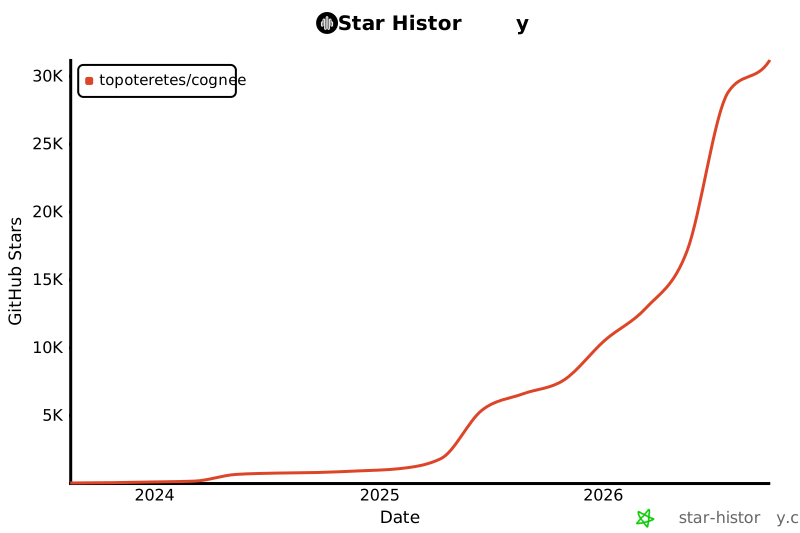](https://star-history.com/#topoteretes/cognee&Date)
|