
279 lines
9 KiB
Markdown
279 lines
9 KiB
Markdown
# cognee
|
|
|
|
We build for developers who need a reliable, production-ready data layer for AI applications
|
|
|
|
|
|
<p>
|
|
<a href="https://github.com/topoteretes/cognee/fork">
|
|
<img src="https://img.shields.io/github/forks/topoteretes/cognee?style=for-the-badge" alt="cognee forks"/>
|
|
</a>
|
|
<a href="https://github.com/topoteretes/cognee/stargazers">
|
|
<img src="https://img.shields.io/github/stars/topoteretes/cognee?style=for-the-badge" alt="cognee stars"/>
|
|
</a>
|
|
<a href="https://github.com/topoteretes/cognee/pulls">
|
|
<img src="https://img.shields.io/github/issues-pr/topoteretes/cognee?style=for-the-badge" alt="cognee pull-requests"/>
|
|
</a>
|
|
<a href="https://github.com/topoteretes/cognee/releases">
|
|
<img src="https://img.shields.io/github/release/topoteretes/cognee?&label=Latest&style=for-the-badge" alt="cognee releases" />
|
|
</a>
|
|
</p>
|
|
|
|
cognee implements scalable, modular data pipelines that allow for creating the LLM-enriched data layer using graph and vector stores.
|
|
|
|
|
|
|
|
|
|
|
|
|
|
<p>
|
|
<i> cognee aims to be dbt for LLMOps</i>
|
|
</p>
|
|
|
|
|
|
|
|
Try it in a Google collab <a href="https://colab.research.google.com/drive/1jayZ5JRwDaUGFvCw9UZySBG-iB9gpYfu?usp=sharing">notebook</a> or have a look at our <a href="https://topoteretes.github.io/cognee">documentation</a>
|
|
|
|
|
|
|
|
|
|
If you have questions, join our <a href="https://discord.gg/NQPKmU5CCg">Discord</a> community
|
|
|
|
|
|
|
|
|
|
|
|
## 📦 Installation
|
|
|
|
### With pip
|
|
|
|
```bash
|
|
pip install cognee
|
|
```
|
|
|
|
|
|
### With poetry
|
|
|
|
```bash
|
|
poetry add cognee
|
|
```
|
|
|
|
|
|
## 💻 Usage
|
|
|
|
### Setup
|
|
|
|
```
|
|
import os
|
|
|
|
os.environ["LLM_API_KEY"] = "YOUR OPENAI_API_KEY"
|
|
|
|
```
|
|
or
|
|
```
|
|
import cognee
|
|
cognee.config.llm_api_key = "YOUR_OPENAI_API_KEY"
|
|
```
|
|
You can use different LLM providers, for more info check out our <a href="https://topoteretes.github.io/cognee">documentation</a>
|
|
|
|
In the next step make sure to launch a Postgres instance. Here is an example from our docker-compose:
|
|
```
|
|
postgres:
|
|
image: postgres:latest
|
|
container_name: postgres
|
|
environment:
|
|
POSTGRES_USER: cognee
|
|
POSTGRES_PASSWORD: cognee
|
|
POSTGRES_DB: cognee_db
|
|
volumes:
|
|
- postgres_data:/var/lib/postgresql/data
|
|
ports:
|
|
- 5432:5432
|
|
networks:
|
|
- cognee-network
|
|
```
|
|
|
|
|
|
If you are using Networkx, create an account on Graphistry to visualize results:
|
|
```
|
|
|
|
cognee.config.set_graphistry_username = "YOUR_USERNAME"
|
|
cognee.config.set_graphistry_password = "YOUR_PASSWORD"
|
|
```
|
|
|
|
(Optional) To run the UI, run:
|
|
```
|
|
docker-compose up cognee
|
|
```
|
|
Then navigate to localhost:3000/wizard
|
|
|
|
### Run the default example
|
|
|
|
Make sure to launch the Postgres instance first. Navigate to the cognee folder and run:
|
|
```
|
|
docker compose up postgres
|
|
```
|
|
|
|
Run the default cognee pipeline:
|
|
|
|
```
|
|
import cognee
|
|
|
|
text = """Natural language processing (NLP) is an interdisciplinary
|
|
subfield of computer science and information retrieval"""
|
|
|
|
await cognee.add([text], "example_dataset") # Add a new piece of information
|
|
|
|
await cognee.cognify() # Use LLMs and cognee to create knowledge
|
|
|
|
await search_results = cognee.search("SIMILARITY", {'query': 'Tell me about NLP'}) # Query cognee for the knowledge
|
|
|
|
print(search_results)
|
|
|
|
```
|
|
|
|
|
|
### Create your pipelines
|
|
|
|
cognee framework consists of tasks that can be grouped into pipelines. Each task can be an independent part of business logic, that can be tied to other tasks to form a pipeline.
|
|
Here is an example of how it looks for a default cognify pipeline:
|
|
|
|
|
|
1. To prepare the data for the pipeline run, first we need to add it to our metastore and normalize it:
|
|
|
|
Start with:
|
|
```
|
|
docker compose up postgres
|
|
```
|
|
And then run:
|
|
```
|
|
text = """Natural language processing (NLP) is an interdisciplinary
|
|
subfield of computer science and information retrieval"""
|
|
|
|
await cognee.add([text], "example_dataset") # Add a new piece of information
|
|
```
|
|
|
|
2. In the next step we make a task. The task can be any business logic we need, but the important part is that it should be encapsulated in one function.
|
|
|
|
Here we show an example of creating a naive LLM classifier that takes a Pydantic model and then stores the data in both the graph and vector stores after analyzing each chunk.
|
|
We provided just a snippet for reference, but feel free to check out the implementation in our repo.
|
|
|
|
```
|
|
async def chunk_naive_llm_classifier(data_chunks: list[DocumentChunk], classification_model: Type[BaseModel]):
|
|
if len(data_chunks) == 0:
|
|
return data_chunks
|
|
|
|
chunk_classifications = await asyncio.gather(
|
|
*[extract_categories(chunk.text, classification_model) for chunk in data_chunks],
|
|
)
|
|
|
|
classification_data_points = []
|
|
|
|
for chunk_index, chunk in enumerate(data_chunks):
|
|
chunk_classification = chunk_classifications[chunk_index]
|
|
classification_data_points.append(uuid5(NAMESPACE_OID, chunk_classification.label.type))
|
|
classification_data_points.append(uuid5(NAMESPACE_OID, chunk_classification.label.type))
|
|
|
|
for classification_subclass in chunk_classification.label.subclass:
|
|
classification_data_points.append(uuid5(NAMESPACE_OID, classification_subclass.value))
|
|
|
|
vector_engine = get_vector_engine()
|
|
|
|
class Keyword(BaseModel):
|
|
uuid: str
|
|
text: str
|
|
chunk_id: str
|
|
document_id: str
|
|
|
|
collection_name = "classification"
|
|
|
|
if await vector_engine.has_collection(collection_name):
|
|
existing_data_points = await vector_engine.retrieve(
|
|
collection_name,
|
|
list(set(classification_data_points)),
|
|
) if len(classification_data_points) > 0 else []
|
|
|
|
existing_points_map = {point.id: True for point in existing_data_points}
|
|
else:
|
|
existing_points_map = {}
|
|
await vector_engine.create_collection(collection_name, payload_schema=Keyword)
|
|
|
|
data_points = []
|
|
nodes = []
|
|
edges = []
|
|
|
|
for (chunk_index, data_chunk) in enumerate(data_chunks):
|
|
chunk_classification = chunk_classifications[chunk_index]
|
|
classification_type_label = chunk_classification.label.type
|
|
classification_type_id = uuid5(NAMESPACE_OID, classification_type_label)
|
|
|
|
...
|
|
|
|
```
|
|
|
|
To see existing tasks, have a look at the cognee.tasks
|
|
|
|
|
|
3. Once we have our tasks, it is time to group them into a pipeline.
|
|
This snippet shows how a group of tasks can be added to a pipeline, and how they can pass the information forward from one to another.
|
|
|
|
```
|
|
tasks = [
|
|
Task(document_to_ontology, root_node_id = root_node_id),
|
|
Task(source_documents_to_chunks, parent_node_id = root_node_id), # Classify documents and save them as a nodes in graph db, extract text chunks based on the document type
|
|
Task(chunk_to_graph_decomposition, topology_model = KnowledgeGraph, task_config = { "batch_size": 10 }), # Set the graph topology for the document chunk data
|
|
Task(chunks_into_graph, graph_model = KnowledgeGraph, collection_name = "entities"), # Generate knowledge graphs from the document chunks and attach it to chunk nodes
|
|
Task(chunk_update_check, collection_name = "chunks"), # Find all affected chunks, so we don't process unchanged chunks
|
|
Task(
|
|
save_chunks_to_store,
|
|
collection_name = "chunks",
|
|
), # Save the document chunks in vector db and as nodes in graph db (connected to the document node and between each other)
|
|
run_tasks_parallel([
|
|
Task(
|
|
chunk_extract_summary,
|
|
summarization_model = cognee_config.summarization_model,
|
|
collection_name = "chunk_summaries",
|
|
), # Summarize the document chunks
|
|
Task(
|
|
chunk_naive_llm_classifier,
|
|
classification_model = cognee_config.classification_model,
|
|
),
|
|
]),
|
|
Task(chunk_remove_disconnected), # Remove the obsolete document chunks.
|
|
]
|
|
|
|
pipeline = run_tasks(tasks, documents)
|
|
|
|
```
|
|
|
|
To see the working code, check cognee.api.v1.cognify default pipeline in our repo.
|
|
|
|
|
|
## Vector retrieval, Graphs and LLMs
|
|
|
|
Cognee supports a variety of tools and services for different operations:
|
|
- **Modular**: Cognee is modular by nature, using tasks grouped into pipelines
|
|
|
|
- **Local Setup**: By default, LanceDB runs locally with NetworkX and OpenAI.
|
|
|
|
- **Vector Stores**: Cognee supports Qdrant and Weaviate for vector storage.
|
|
|
|
- **Language Models (LLMs)**: You can use either Anyscale or Ollama as your LLM provider.
|
|
|
|
- **Graph Stores**: In addition to LanceDB, Neo4j is also supported for graph storage.
|
|
|
|
- **User management**: Create individual user graphs and manage permissions
|
|
|
|
## Demo
|
|
|
|
Check out our demo notebook [here](https://github.com/topoteretes/cognee/blob/main/notebooks/cognee%20-%20Get%20Started.ipynb)
|
|
|
|
|
|
|
|
[<img src="https://i3.ytimg.com/vi/-ARUfIzhzC4/maxresdefault.jpg" width="100%">](https://www.youtube.com/watch?v=BDFt4xVPmro "Learn about cognee: 55")
|
|
|
|
|
|
|
|
## Star History
|
|
|
|
|
|
[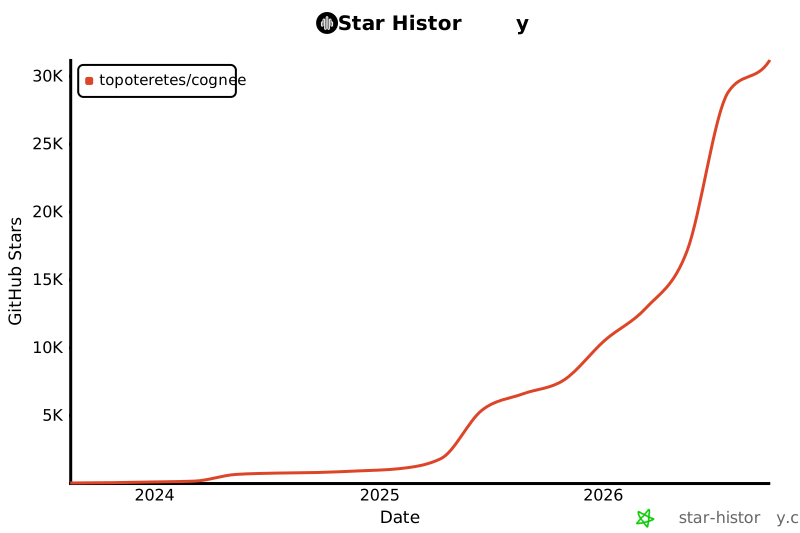](https://star-history.com/#topoteretes/cognee&Date)
|