# OpenRAG
OpenRAG is a comprehensive Retrieval-Augmented Generation platform that enables intelligent document search and AI-powered conversations. Users can upload, process, and query documents through a chat interface backed by large language models and semantic search capabilities. The system utilizes Langflow for document ingestion, retrieval workflows, and intelligent nudges, providing a seamless RAG experience. Built with Starlette, Next.js, OpenSearch, and Langflow integration. [](https://deepwiki.com/phact/openrag)
## 🚀 Quick Start
### Prerequisites
- Docker or Podman with Compose installed
- Make (for development commands)
### 1. Environment Setup
```bash
# Clone and setup environment
git clone https://github.com/langflow-ai/openrag.git
cd openrag
make setup # Creates .env and installs dependencies
```
### 2. Configure Environment
Edit `.env` with your API keys and credentials:
```bash
# Required
OPENAI_API_KEY=your_openai_api_key
OPENSEARCH_PASSWORD=your_secure_password
LANGFLOW_SUPERUSER=admin
LANGFLOW_SUPERUSER_PASSWORD=your_secure_password
LANGFLOW_CHAT_FLOW_ID=your_chat_flow_id
LANGFLOW_INGEST_FLOW_ID=your_ingest_flow_id
NUDGES_FLOW_ID=your_nudges_flow_id
```
See extended configuration, including ingestion and optional variables: [docs/configure/configuration.md](docs/docs/configure/configuration.md)
### 3. Start OpenRAG
```bash
# Full stack with GPU support
make dev
# Or CPU only
make dev-cpu
```
Access the services:
- **Frontend**: http://localhost:3000
- **Backend API**: http://localhost:8000
- **Langflow**: http://localhost:7860
- **OpenSearch**: http://localhost:9200
- **OpenSearch Dashboards**: http://localhost:5601
## 🖥️ TUI Interface
OpenRAG includes a powerful Terminal User Interface (TUI) for easy setup, configuration, and monitoring. The TUI provides a user-friendly way to manage your OpenRAG installation without complex command-line operations.
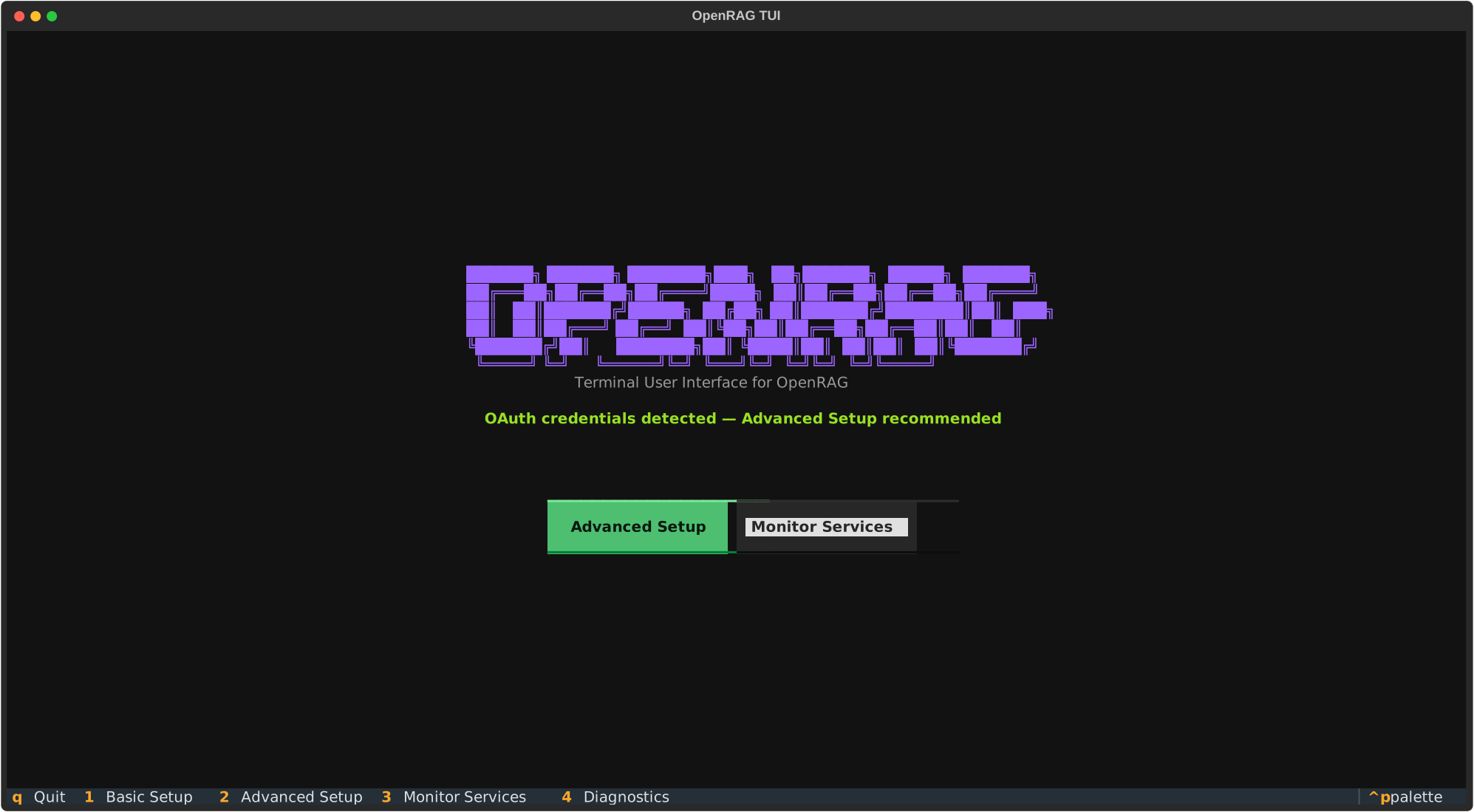
### Launching the TUI
```bash
# Install dependencies first
uv sync
# Launch the TUI
uv run openrag
```
### TUI Features
See the full TUI guide for features, navigation, and benefits: [docs/get-started/tui.mdx](docs/docs/get-started/tui.mdx)
## 🐳 Docker Deployment
### Standard Deployment
```bash
# Build and start all services
docker compose build
docker compose up -d
```
### CPU-Only Deployment
For environments without GPU support:
```bash
docker compose -f docker-compose-cpu.yml up -d
```
More deployment commands and tips: [docs/get-started/docker.mdx](docs/docs/get-started/docker.mdx)
## 🔧 Troubleshooting
### Podman on macOS
If using Podman on macOS, you may need to increase VM memory:
```bash
podman machine stop
podman machine rm
podman machine init --memory 8192 # 8 GB example
podman machine start
```
### Common Issues
See common issues and fixes: [docs/support/troubleshoot.mdx](docs/docs/reference/troubleshoot.mdx)
## 🛠️ Development
For developers wanting to contribute to OpenRAG or set up a development environment, please see our comprehensive development guide:
**[📚 See CONTRIBUTING.md for detailed development instructions](CONTRIBUTING.md)**
The contributing guide includes:
- Complete development environment setup
- Local development workflows
- Testing and debugging procedures
- Code style guidelines
- Architecture overview
- Pull request guidelines
### Quick Development Commands
```bash
make help # See all available commands
make setup # Initial development setup
make infra # Start infrastructure services
make backend # Run backend locally
make frontend # Run frontend locally
```


